Friday, 20 January 2017
End of the season in cattle station and journey through the Red Centre
So a lot has happened since I last wrote (so I apologize in advance for the long post). I should start with ending the season at Kilto station – one of the experiences, that I know that I will always remember, because it was just so extraordinary for me. You don’t even have things like a cattle stations in Europe. Millions of acres of land (there are stations that are bigger than the whole country of Estonia in Australia), where the weather can be anything from desert-like dry to fully flooded. Wild cows and bulls roaming this rough bushland in herds, chasing the place with the best food and water. Then, in the middle of this emptiness, there is some action going on (the cattle stations). Since you are usually in the middle of nowhere, you have to be self-sustainable all the way. So there are generators going on 24/7 giving power to everything around and water is constantly being pumped up by tens of pumps trying to keep up with the water needs - giving water to the 3000 cows that are in the yards, and all the others in the bush and to all the hay that is being grown, for the animals on the huge irrigation pivots, to water the lawns and for people’s living needs. The only 'populated places' that you find inbetween towns in the remote areas are cattle stations and aboriginal communities.
Back to the last couple of months. It was the end of the dry season and „the wet“ was coming. So most days were up to (and over) 40 degrees, even the wind was burning your face, the cows had eaten anything that is eatable (even tree bark and small branches)from anywhere they could (it had been dry for months now) so it was all dusty and steaming hot. And then on some days,suddenly a cold wind came from somewhere and some clouds appeared. In a short while, it was pouring down the heaviest rain that I had ever seen (ok. now I'm lying, I saw similar rains in Kenya, when the wet season started) and the wind was tearing off pieces of roof and you actually got cold for these 30 minutes (or a couple of hours). But then you knew that the next day, all the water from the ground had to evaporate. So the next day, the air was wet and thick, and you didn’t even have to move to be soaking wet from both the sweat and the humidity, from head to toe. In the yards, since all the ground is basically covered in cow shit, all the steam was also a thick steam of ... well, the same thing. After a few big storms that we had, the small pond that we had in the middle of the station, started flooding and flooded all the roads around it. The pens, where the cows were, turned into a thick and sticky substance. In the end, when I was walking through a pen in my gumboots, I sunk into a 20-30cm deep stinky glue (still mostly shit) with every step.
But the whole experience was very cool – in all these circumstances I was chasing 600-800kg bulls (we mostly had big bulls), I got to be in a helicopter while my manager was mustering with it, I learned how to drive all kinds of loaders and stuff, even managed to unload a whole truck full of hay bales (it took me over an hour, because it was my first time using a tractor for these purposes), learned how to repair the cables in the yards, and in doing that learned how to use many tools that I had not used before, mustered cows on a quadbike and so on.
Maybe the most eye-opening thing that I learned was about moving animals. At first I tried to use loud voice and all other things, but by the end of three months I actually had started to 'feel the animals' much more. I learned how to move them only by moving myself. So I did not have to scream or shout, I just had to move just a step or two in the right direction. The hardest part was probably to figure out in which direction you had to move. Because cows are different and situations are different, then sometimes what worked for one cow, ruined the whole situation for the other cow. It was all about giving and releasing pressure from the right direction. I guess it is one skill that I can never directly use again, because it is unlikely that I will ever need to move wild bulls again but I think that in time, I will learn how to apply it in some other situations as well (maybe even dealing with people?)
In the end, the three musketeers (our three pet cows) turned into four musketeers, because Snowflake, the head of the gang, gave birth to a little red calf with blue eyes. Actually I did not see the blue eyes, because apparently cowboys see colours a bit differently that normal people do. For example, when I call a cow 'white' then they say 'grey', when I say 'beige' they say 'creamy', when I say 'brown' then they say 'red' and so on. So a red calf with blue eyes. A few days after the calf was born, Snowey started needing a lot more attention than before. That meant that all four of them came to the living quarters every evening to chill around there with the people. So the last few evenings at Kilto station were especially nice. For several evening we were just sitting on the grass with four of them, some other members of the cow-gang looking from the distance because they were not so fond of people. Peaches was getting even more scratches than usually, and if you scratched her, she would either lift her head as high as she could, so that you could scratch the skin on her neck better or would put her head on your lap. Even chockflake (she does not really like petting but she occasionally tolerates it to be part of the gang) was quite relaxed, seemed to enjoy her pets and even tried to lick me a couple of times. The Little Red (when we left, she did not have a name yet) was looking at us with eyes so big that it was probably impossible to open them any more and you could see it in her eyes that she was puzzled "Why is my mommy letting these two-legged creatures touch her? Why are we here? What do these creatures want from me?". And then there was Snowey, who wanted to be very close to people. She kept licking everybody, but she tried especially hard to lick my hair straight. She was quite sure, that if she licked enough, then my hair would get smooth again. And it probably would have, if I had let her continue. Have you even been licked by a cow? The tongue is at least 30cm long (and Brahmens, that we mostly had, have blue tongues) and it is rougher than the roughest sandpaper, so it actually works like a comb. Another thing that Snowey did was demanding alcohol - she really loves beer and rum. So one evening, as we were chilling there on the lawn with the cows and having a few beers, Snowey either on a quest to get some booze or to lick someone did not notice my foot (to be fair, it was dark and my foot is quite small). After three months of wearing steel-capped shoes for six days a week, ten hours a day, my foot finally gets stepped on a 700kg cow on one of the last days, and I'm not even working. Fortunately, I just had a big blue hoof-mark on my foot and no broken bones.
We also had our end-of-the-season-slash-Christmas partly. Of course, since everyone was used to waking up at 5 o'clock, the Christmas party also started early - at 10 o'clock in the morning already. The owner of our station has a summer cottage by the sea, so we all went there and waited for the lagoon to fill up with water. The boss had also bought a jetski for that occasion so he was giving us all rides up and down the lagoon on two big tubes, while the others were using various floating devices (the fanciest of them had an ice box for keeping the beers cold) to chill in the water. We managed to lose at least two pairs of sunglasses (being towed by a jetski with your sunnies on is actually not a good idea) but overall it was one of the coolest Christmas parties, I have ever had, with free booze, jetski, sea, some Aussi barbeque, some cowboys and just chilling out in perfect weather (only if you stayed in the water or shade most of the time).
But enough of Kilto (I could write ten more pages about it), much more has happened since that as well. We had an ambitious plan to go from Broome to Darwin and then down to Adelaide through the centre of Australia (the Red Centre) in two weeks. Who is not familiar with the geography of Australia, I recommend you take a map and while you are doing that, also look at the kilometres. It is about 5000km to go from Broome to Darwin to Adelaide (but we did a 1000km detour as well so at least 6000km). In comparison, it is 4500km from Tallinn to the place where Spain meets Marocco at the Strait of Gibraltar. So when we started our journey, I was ready for some unbearable heat and dryness, big deserts with no plants and lack of water, but only some of my expectations were met.
Our first destination was Darwin and on the way there we were warned (multiple times actually) that there is a cyclone risk in Darwin. So when we got there, it was rainy, windy and not very hot. Now when I say rainy, I mean walls of water pouring down at times, the wind was so strong that it made the rain blow almost vertically under any shade you found (even if you were standing 5m away from the edge). But still, as soon as the rain stopped and the sun was shining through the clouds, it got incredibly hot. We stayed in Darwin for two nights - spend the first one in the car and got a room at a backbacker for the other one (this was the only time during the whole journey down that we actually stayed indoors for the night). We had not seen a normal big town for about five months (Broome was great and all, but between Perth and Darwin there actually are no big cities, where you can easily find anything you need and actually have a choice between stores) so we went a bit crazy and got ourselves everything that we had planned to get (like now shoes, a tent and so on) and started heading south. The storms and the winds were moving South with us (we realized that later) so it was constantly changing between cloudy and rainy.
When we were conducting our usual morning oil-water-tyres check, we discovered that we had to add water to the radiator (Location - somewhere between Katherine and Tennant Creek). And then the next morning we had to add even more. We discovered that one of the hoses (the one that takes water from the engine to the heater) was leaking. After accidentally breaking off the hose, spending a few hours trying to get out the piece that had remained between the clamps and ducktaping it all, we moved on. We also discovered that another hose was leaking, but much less, so we did not worry about that so much. Did I already mention the dates? When we got to Tennant Creek on the 23rd of December, the only shop that sells car parts had been closed for the rest of the year so we continued our journey, hoping that Alice Springs (500km down the road, towards the Red empty Centre of Australia) would have some shops open... I'll get back to the car in a bit- that was only the beginning of the problems, but we did other things on the way as well.
We also saw Devil's Marbles - amazing big balls made out of stone that are shattered around one particular place and decided to spend the night there (it was only 3.30 for camping... it was the second and last time we paid for sleeping on this trip). We also visited the UFO centre of Australia - apparently people see aliens around there very often and even the aboriginals talk about seeing 'strange people' around Devil's Marbles so maybe it is a UFO centre, after all we were getting closer to Uluru (Ayers rock) , which is sometimes thought to be an old space ship. And there are some thermal springs on the way, that have Flying Foxes living around them. We thought about taking a couple of beers to the thermal pools, at the springs. We almost did not do that, because there were big signs up how 'alcohol is not permitted anywhere in the park' (we decided to take one can then... as a compromise). Of course, when we got there, there were three groups of Aussies there with piles of full and empty cans. There is a strange thing that I have noticed about Australians - there are some rules that everybody ignores and noone even thinks about it. And then there are some rules that everybody follows (even though sometimes they might be silly, pointless rules). So one big part of learning to live here is to find out, which rules (the written and the unwritten ones) are worth following and which ones are not.
Anyways, we got to Alice Springs and luckily discovered that the SuperCheap Auto (the best and the biggest shop for anything connected to cars) was open. The guy at the SuperCheap found us a hose (not the one made specifically for our car, but a general one, that would work as well) and we tried to get the other hose as well, but since we were not very good at explaining what hose it was (it had some strange connector in the end), the guy came to the car to take a look. Long story short: the hose that takes fuel to the engine was leaking (probably had been leaking for a while, because we noticed that the car had some trouble starting already at Kilto, so a few thousand kilometres back) on the heater hose and probably that had caused the heater hose to break. At that point we also discovered that the water had started leaking into the car again, one of the headlights needed a new lightbulb and the windscreen wipers were past their useful period of life. So we got some goo to put in the connector of the fuel hose and a new heater hose (decided to ignore the other problems for the moment), did our food shopping for the next couple of days and started driving towards the McDonnell ranges national park (the plan was to go to Uluru with a little d-tour to see the Kings Canyon and other stuff on the way) to find the first place to stop and camp and have our Christmas dinner. For those who are not Estonians - in Estonia, the evening on the 24th is usually the most important day of Christmas. For example in my family, we usually have a big Christmas dinner and gathering and Santa comes with the presents and everyone has to sing or read poems to Santa for each present.
So it was raining a bit on our Christmas Eve (unfortunately not the whole time), we were fixing our car and making kangaroo meat, sauerkraut and potatoes on the fire somewhere in the bush, out of Alice Springs. The next day, our car seemed to be fixed and we spent a day looking at all the waterfalls, gorges and meteor-holes on the way. On our way to Kings Canyon was a 160km stretch of road (the Mereene Loop) that needed a permit to drive on, since it was going through Aboriginal lands (in the northern part of West Aus, the North Aus and the norther part of South Aus, there are big stretches of land that the white man is forbidden to enter, unless you have a special permit. The roads in the heart of these areas are unmarked and wild and unknown). So we hopped into one of the homesteads that was supposed to give out permits and got one. We also enquired about the possibilities of stopping for the night on the Mereene Loop road (as it was late afternoon and we would not have made through it before the dark). The young fella who talked to us said that there should be places for stopping but they will not have any facilities and he also warned us that the roads may be a bit slippery, because it had been raining for the last couple of days. So we were driving on the road (gravel of course) and tried to find the place, but there was nothing there. It was getting darker and darker and we needed a place to stay. So we found a place with some trees and bushes and drove into the bush a bit (it was maximum 100m, but we did not want to stay on plain sight on aboriginal lands). The ground was a bit wet, but it was not a lower area or a floodway, by the looks of it.
It started raining again at some point at night. When Erik went outside for a moment he said 'there is water everywhere'. I just said sleepily 'put my shoes inside' (as I later found out, they were floating around in front of the tent). In the morning, when we woke up (it was raining slightly), there were a few small puddles of water (so I thought that Erik had been exaggerating at night) and everything we had left outside were muddy and wet. So we packed everything up, wet and muddy as everything was, did not even have breakfast, sat in the car and... did not move anywhere. The car was about 15cm in the mud. So we got our little shovel (almost a meter long and very fragile, not the best tool in the world), gathered some branches and were out of the mud in 15min. The rain got stronger. We started driving towards the road and... got stuck again. The rain got even stronger, we were soaking wet, muddy, digging and getting branches. All that was heppening was that the car was digging itself deeper and deeper until finally the bottom touched the ground. Our car is quite high, it is even made higher after buying it, but we were still on our bottom, so imagine the depth of the holes. So there we were, the puddles of water were getting bigger and bigger and kept joining each other until there was only water all around us, no dry ground to be seen, we were cold and wet and shivering in the car. In was raining and raining and it seemed that it would never stop. I started accepting the fact that we would probably be there for days and started calculating how much food and water we have, how long we could last. There were no cars driving on that road anyway (actually we saw 4-5 during the whole day) but even if we stopped one car, there was nothing they could do as they would get just as stuck before they even reached us.
So I'll leave these two miserable creatures sitting in the mudd there to jump forward for a moment and give you some information about the situation that we did not know about at that very moment. Firstly, it was forbidden to spend a night on the Mereene Loop, it was 50,000 dollars fine for doing that (but that was the fault of the guy who have us the permit that we did not know that) and secondly the Mereene Loop road was closed because of the rains - so no cars were allowed to come on that road because there was too much water. So our chances of being rescued by someone else were even thinner than we knew it at that moment. And well... these were aboriginal lands, but we already knew that.
So while I was depressed to the bone and thought that this may be where we will stay, Erik decided that we will not get out if we do not do anything. So he got out in the rain, got us both dry, rainproof clothes, put them on and headed outside to assess the situation. The rain got also weaker (and even stopped for some periods of time) and since Erik was being busy, I had to do something as well. So Erik was digging drenches to get the water out from under our car (as soon as the rain got weaker, the water started slowly-slowly disappearing as well but the ground was all very soft), to build put branches under the wheels etc. I started putting branches over the softer parts of ground where we would need to cross. We even took some of the heavier things, like spare fuel and water out of the car to make it lighter. But no matter what we did, we still needed to get the car out of the hole first so we decided to try the bushmechanics method. Out of our four wheels, one front wheel had traction - all the other three were going around in the air. We took a rope and a strap, connected them to each other, tied one end to a tree and the other end to the front wheel that was going around. The idea was to use the wheel as a winch. The first attempt was unsuccessful - the strap snapped almost immediately. The second time, we doubled up the strap and... it worked!! So the car got out of the mud-holes and... got stuck about 5m later. But now we were smarter - we started taking down the branches and digging right away (we were about 70m away from the road but it was all soft mud) and got out... and got stuck again... We were muddy and wet and tired; all of our stuff was lying beside the mudholes and branch-roads that we had left behind. So when we got stuck for the sixth time, I built a more proper road than the previous ones - over 5 metres of branch road, that would actually help to hold the car. And it helped - the short stretch of branch 'road' was enough to build up the speed and get through the last 60m of mud.
So we gathered up all of our things that were spread out in the bush (all covered in red mud) and continued our journey, after 6 hours of building and digging. The rest of Mereene loop was... wet, to say the least. We had small lakes on our way that we had to go through and we just tried to keep to the centre and hope that the water had not taken a part of the road away (luckily it had not)and jokingly said to each other 'I think this road might be closed'. We got to Kings Canyon resort (and the sealed road started again, went to the bar, got ourselves a pizza and a beer and were happy that we were moving again. I asked the barman, where the actual Kings Canyon was. He told me that the road was closed. We were kind of relieved about that because we were not in a mood for any more adventures on that day anyway. So we started driving away from Kings Canyon when... there were signs on the road 'No access'. So I jumped into the local reception to find out, if there was any way that we could use for leaving. And that was when I found out about Mereene Loop being closed, about the 50,000 fine and also that the main road was under water and closed. We were trapped. We drove back on our unsealed road for about 20km and stayed in a free rest area. Over there we got our last big rains and suddenly the sun came out. It was minutes (even seconds) from the strongest rains to bright, clear blue skies. As we later found out, the same rains continued their way down south (they got ahead of us while we were stuck) and caused floods, panic and evacuations in South Australia (we heard about them in the news).
So anyways... the weather was nice again, we did go to see the Canyon for a bit on the next day but we were not really in the right mood because of what we had to go through to get there. So we decided to go straight to Uluru instead. I had really low expectations, going to Uluru. People are saying that it is just a big rock. So when we saw it on the horizon, 50km away from it, I still did not think much of it. But actually it left a great impression. Yes it is a big rock. But it is a f***ing big rock. It is of a bright red colour which changes the red or orange depending on the time of day and the light. It is very important to the aboriginal people, because it gathers water and gives shade. We read the stories about the rock and went around it - and I can say it is so much more than what you can see from the picture. The pictures are all taken from one and the same side. Actually it has amazing shapes and waterfalls, and images and shapes on it (the blackfellas have stories and myths for all of the shapes), some areas look like illuminators of a spaceship (I really think it is a possibility that it was a spaceship), others look like there are people trapped inside the stone, trying to get out; it has caves and holes and amazing shapes and patterns on it.
So that evening we had a sleeping spot on a sand-dune, where we could see the magical Uluru straight from our camp. Our magical evening was ruined a bit my the millions of flying termites who come after the rains. We finally had to hide in the tent. We didn't even have to put out our candle outside because it was so full of insects after a while that the light went out. So there we were, in the red centre; in a place that sometimes does not see rain for years and we were there at the time of the worst floods. But at least the nature was happy - the insects were going crazy and everything was green.
I'll skip the next one thousand kilometres (and a couple of days of driving) because there was nothing there, literally. As soon as South Australia started, it was back to low bush... and there was only one town on the way - Coober Pedy where half of the houses are under ground and where they dig for opals. So we finally got to Adelaide to meet some of the friends that we had met on our Gibb River Road trip (I think I did mention them). We spent the days around the New Years in a farm, 10km out of a town called Mannum. We found out that South Australia is the weed capital of Australia, as far as I have seen. It is cheap around there and people are very relaxed about it as well. So when we were out at Mannum on New Year's (we were the only backbackers that we saw during these days, everyone else were Aussies) and the days around it as well, almost every person, from teenagers to older people (for example our hosts, who were 50-year-old farmer-motorcyclists) were quite openly consuming cannabis (although is is still illegal there as well). We actually spent most of our New Year's across the river from Mannum (there was a free ferry going 24/7), made some sašlõkk (marinated meat, the Estonian way. I wanted to make yoghurt marinade and accidentally bought the wrong kind. So we had mixed berry yoghurt sašlõkk), chilled and camped. Followed by a day of lying down in a big bus, set up net to our friend's house, that was rocking like a boat the whole day that we were watching movies and doing absolutely nothing.
We spent almost a week going from Adelaide to Melbourne on the Great Ocean Road. The closer we got to Melbourne the more tourists we saw. We went to see the 12 apostles (formerly 12, now about 5,5 big rock formations in the sea) and were shocked - the parking lot was bigger than a big shopping centre and it was all full of people. But The Great Ocean Road was cool - winding up and down in the forests and mountains or cut into rock by the sea, with steep rock going up on one side and steep rock going down to the sea on the other side.
We ended our journey in a house full of Estonians. So far we have spent most of our time in Australia with Australians (the cattle station life and chilling out near Adelaide for example) and had only seen a few Estonians in the six months that we have spent here. And now we lived with eight of them. Well... actually the house was full, which meant that we put our huge tent (a big 4-person tent - some beetles had eaten holes in the small one that we previously had, so we had to get a new one in Darwin and the 4-person tent had the best price-quality relation) in the back yard, which was tiny and paved. But that did not really matter - we had a lemon tree growing in the garden, access to shower, toilet and kitchen, and lived in Melbourne, so everything was perfect. Anyways, our friends from Estonia, Jaanika and Karl, were coming to Australia for the very first time and we wanted to help them get started with their travels here (get a bank account, TFN, phone number, car etc) and that was the main reason for being in Melbourne when we were there.
So after a week of urban camping we moved up to the mountains to Kinglake (a bit over an hour out of Melbourne). Erik got a job here that actually has something to do with his studies, which is a good thing (I can't imagine even getting one myself because noone wants a teacher for just a few months) and I decided to find a job somewhere around here as well. Have not been so lucky yet, but I have had some promising replies from the local bars-cafès. So now we have our own caravan, a view over the mountains and quite good facilities. The small farm that we live in also has sheep, horses, dogs, rabbits and chicken (free eggs!). We are planning to stay here for a while so I will probably have time to write again a bit sooner. Probably when I actually get a job and we find out what our daily life here will look like.

Saturday, 29 October 2016
Life with cows and the Gibb river road
So by now we have
worked here on the station for a month and probably will work for another one
and a half. As I think I already mentioned, we are working in a station that is like the
stop-off before the abattoir. So basically all the bush around the Kimberley
region is full of cows, who live totally free for whole of their life, very
often not even ever seeing a human being. Then they are mustered in all of the
stations. Mostly helicopters, motorbikes and quad-bikes are used for that, as
doing it on foot or even on horses would
be too difficult because of the large areas. So the cows come here in big
double-decker trucks, we unload them (they have usually been caught not even
a week before they get here) and then we process them. If the cows come from
tick-infested areas, then we dip them in water, mixed with a solution against
ticks. Then all the cows are drafted, which means that we sort them into groups
(getting to know some of the groups takes a bit of time, as they have a
different name for everyone - we have mickeys, heffers, pot pots, steer,
spadejobs, export cows and so on and so on... every category always has
sub-categories as well). The main part of my job is getting the cows and bulls
from their pens and chasing them down the lane-ways, keeping them moving (coming
through the gate one by one for example) and later, when they are all ready to
go into the pens (probably different ones that they were in before because we
have sorted into new subgroups) then I use the quad-bike to chase them back. For
example they may come in as one group but be taken back as four or even six
different groups to as many different pens. In order to do that a lot of
different gates have to be opened and closed because the yards are kind of like
a big labyrinth that can be changed around according to the needs. I also help to load the trucks, clean the
water- and feed draughts, bring hay for the pens that don’t have a feed drought,
fix the fences and basically do everything that is needed.
The cows can be
very smart sometimes. For example they figure it out very soon that if they brake
their water draught then they will get better water - we have automatic
systems in every one that have floats, so when the water level gets too low,
more water will flow into the drought. Of course the water gets warm in the 40
degrees that we have outside, so if they break the system they will get a
constant flow of cold water. But that means firstly that the pens of the cows
downhill from the ’smart ones’ will get flooded and if it happens more than
once in a short period of time then they get stuck in the deep mud and we have to pull
them out of it. Secondly it means that the pens that are further away from the
water pumps will not get any new water at all because all the water goes into
the water draught of the cows who have overflowing draughts. Whereas the cows
that are in the open paddocks have realized that they can go further away from
the water draughts (to get the good grass and stuff from the farther corners)
when it rains, because they don’t have to stay near the water anymore. Not to
mention the fact that some bulls discovered that it they work together to lift
up the pipe above their food draught, then they have enough space to go outside.
The latter resulted in us finding 30 bulls in a pen one morning that was
supposed to have 80. So they can be pretty witty sometimes.
Another thing
that I did not realize before is that cowboys don’t have their cowboy clothes
because that is their style and they're trying to be fashionable. Everything actually has a point. For example, the
hat covers the face and neck and the dent in top enables you to grab the hat
with one hand to use it to chase the cows from one place to another. A 5-dollar
straw hat (that you could use for any fruit-veg picking job) breaks in a couple
of days if you try to use it like that. The small scarves are for the dust. And
I would not even dream of going to work without jeans (or any other long pants
that are made of a stronger material) because the fences are burning hot and
you will need to jump on them and over them for sure.
So most of the
cows that live here are big and wild and will not really let you go close to
them. But there are some of them that are pet cows. For example there is a
threesome – Snowflake, Chockflake and Peaches, who always chill around together
(outside the yards of course) and they love their scratches and pats. In return
they will lick you with their long blue tongues that are just about as soft as
sandpaper. And then there is Lenny, who is the sweetest big bull that I have
seen. He just came up to me one day when we were drafting (I had to stand in
their pen to open the gates and help the others form that side) and I was not sure how to
react at first, because as I said, they are usually not very approachable. But
later I found out that he will come and rub his head against you and is the
most gentle animal ever. And then there are the calves of course, who are the
cutest things ever. The newborns are cool as they are still discovering the
world. For example one discovered that it had a tongue and it was trying to
look at it from every corner for twenty minutes and looked very surprised that it was attached to
it and that it could move the strange thing. The same happened with one calf and his legs the other time (imagine someone walking and trying to stand up, being surprised and a bit afraid of their own legs at the same time).
One thing that
bothers me is the concept of eco marketing, seen from this point of view. So
all our cows are being grown naturally and are very ’eco’ but that also means
that no additional vitamins or food supplements can be given to them to fight
some of the diseases. And when a cow is sick and you treat it with any medications
then the price drops drastically (even after the withholding period that most of
the medicines have - the period that it takes for the animal to get the
medicine out of this system). So as soon as you try to help the cow (and I am
not talking about injecting it with some hormones to make it grow faster or
anything like that), it is considered bad in the nowadays great ’eco-friendly
world’ and the cow is "not as good".
Before Australia,
cowboys were something out of the movie for me. I did not really realize that
they actually exist. But it is a whole different world. They do actually listen
to country music and go to rodeos, catch cows with lassos (but only as a
competition). They have their famous bull riders and famous bulls (people
actually know some bulls all over the world by name). They have their own brand
products – you have like a „Prada“ of ropes that you use for staying on bulls
when they are bucking; you have the „Adidas“ of cowboy hats or an „Armani“ of clothes or other stuff that they use. So a whole new world in opening up to me (I don’t think
I’ll get too deep into that world, but is very fascinating to have some peeks)
But speaking
about other nature around here, it gave me quite the scare once as well – I was
cleaning a big water tank a few weeks ago and opened the tap on the outside
bottom part that is used for letting water out, when I felt something weird on
my hand. It kind of felt like two or three ants had bitten me or getting burned
by a stinging nettle, so it was more of an uncomfortable itch than anything
else. So I went back to the tap and saw a Redback sitting on the tap (who does
not know, a Redback is Australia’s second most venomous spider and in top five
in the world according to any lists that I found on the internet). So anyway,
the skin was a bit reddish and there was a small drop of blood in the middle. I
thought that as soon as it gets worse, I will go back to show it to someone, but
it really never did get worse (so I was not sure if I had gotten stung by it at all). In
an hour, there was nothing else to be seen than a tiniest puncture mark, which
turned into the tiniest bruise on the next day. Well... after some more
googling, I found out that only 6-10% of all people have a reaction to the
bite, which means that I most likely was bitten
by one of the most venomous spiders in the world but just did not have a
reaction. (as the spider was sitting right were I had been bitten and it
definitely was not an ant, that leaves a mark like that).
So yeah... the days
are long (start at 6am finish at 5-6pm), the temperature is hot (35-40 degrees)
the work can be very physical and hard but every time that I feel tired or fed
up, something good happens. For example you see some kangaroos hopping by you, while you go home at the sunset, dead tired of anyone or anything, especially
when you have had some d***head bulls who just will not do anything you want
them to. Or you pick up a newborn cow, discover that the shit on it is not dry
at all (and cover yourself completely with it) and you take it back to the
nearest pen (being frustrated that you did it at all because it probably isn’t even the right pen)
and then the next day you discover that the calf has found a mother (not
necessarily the right mother, but that does not matter, as long as it has a
mother who takes care of it). So little good things, mostly things that the
animals around here do, are the things that really make this job great.
But we have not
been working the whole time. We had a plan to go to the Gibb River Road from
the moment that we bought our car. The Gibb is supposed to be a kind of a
must-do for 4WD cars in West Australia but it closes down during the rainy
season because you can’t really get over all the flood-ways and rivers plus the
rain washes some parts of the road away. But now we also had a job that we
liked... which was a bit of a problem. So we managed to talk the people in the
station into letting us go on a trip for a week - which owed us some jealous
and envious looks, because noone else was getting a week off and had to work.
But to be fair, we had planned Gibb for longer than we had planned to be
cowboys so we would have gone anyway... the difference would have just been
whether we came back or not.
So just as we
started our trip, when we had driven for about 100kms (and heading off to 660km
of gravel road with no towns or mechanical services etc) we heard a loud pop
under our hood. When we stopped to take a look we discovered that one of our
radiator hoses had burst into two pieces. We used the cheap and horrible duct
tape that we had to patch it up and headed to Derby (the last actual town on our way to Gibb river road, where we were planning to get all the food and fuel etc from), very hopefully. As it was Saturday
afternoon, no mechanics were working and no shop or wreckers that sold any car
parts was going to be open before Monday. But we did find two guys just having
beers and chilling in a garage (that was actually also closed) and fixing their
boat or something like that. As it happened they had an old Pajero (the same
car that we have but a different model) in their back yard, that still had the
radiator hose intact and they were happy to give it to us for free as long as
we took it off and put it in ourselves and they even threw a bit of coolant in
our radiator. That was another happening in our „extremely lucky Australia“
series. In the same series is: 1. Getting exactly the car that we wanted on the
first day of arriving to Australia with less than a half of its market price 2.
Getting the jobs that we wanted without really going through too much trouble
3. Getting an optometrist in Broome to open a shop especially for me on a Sunday
(they are all closed on sunday)... three times, because I needed new glasses
and also wanted to order some prescription sunnies (the sun is really hard on
the eyes) 4. the Redback thing 5. We met some cool guys at a gorge, who pulled
up at the gorge at the same moment that we did (going the opposite direction on
Gibb), we gave them beers, they gave us other stuff in return and we had the
nicest chilled two hours before going our separate ways 6.I can’t remember them
all, but unbelievably good things keep happening to us on this trip.
Anyways, The Gibb
River road.... we were told to carry at least two spare tyres, 40 litres of
water per person and were warned that we should drive in a convoy as there are
no cars on Gibb and it is so incredibly dangerous. Well sometimes (read:all the
f***ing time) Aussies seem to make things worse than they actually are. Gibb
was just a gravel road – ok, the rains had washed some parts of it away a bit
and we had to cross water about ten times during the 660km but... we did not
break any tyres (nor did we meet anyone who had), there was water available in
at least three places on the road and we saw 6-8 cars every single day. And
people help each other... especially on a road like that, almost noone will
pass you, when they see that you have some trouble. It is remote, but people
behave differently in remote areas as well.
We did see some
crocodiles and accidentally swam with two of them - we did not see them before
getting out of the water. They were freshies so they do not really attack them
unless you step on their foot or something like that. But even knowing that
they are quite harmless, I was not keen on crossing the water inside a cave in
another gorge with two crocodiles being next to the water and at last three
inside it. so we did not go to the end of the Tunnel Creek. We also saw a turtle
and loads and loads of kangaroos and cows. Plus some bigger and smaller
lizards. And I could also describe how amazing the nature was, but I am not so
poetic, that I could actually explain you any of this. We also discovered (not
the first time) that we are not really good tourists because after a few days
we stop appreciating things. If the gorges (even one of them. even the least
amazing one) were in Estonia I would tell every person visiting Estonia how
great it is and that you have to go there.
Unfortunately the
wet season is really near so some of the gorges were already closed and we
finished the Gibb in just three days. So we decided to go and see the Bungle Bungles
as well, which was also very cool, except the drive into the national park
because the road was so corrugated that it took us more than 1,5 hours to drive
50km. the Bungle Bungles are basically these mountains that look like orange
and black striped domes. It is hard to believe that these things actually occur
naturally if you don’t see them yourself.
But now we’re
back in the cattle station to work some more. The weather has gotten hotter
since we left and the air is more humid, plus the mosquitos have also appeared.
So if I post anything else in the near future it will probably be about cows
(or other animals) because they are a cool bunch of animals when you get to
know them and we’re not quite done being cowboys.
PS. I will not add pictures here right now, because the internet is even worse than it was before (it took me 40 minutes to add this post, although I had pre-written it in the computer), but I will add pics in facebook. If I feel incredibly patient one day, I might add them later.
Wednesday, 28 September 2016
How we became cowboys
So when I last
wrote, we were about to hit the road to go through the Great Sandy Desert. I
must have remembered a different section of the Great Sandy (it continues after
Broome), because the part we went through was anything but sandy... or a desert.
The bush was very high and there were even quite a lot of trees. But it was
big, so we did not drive through it with one day, but stopped for a night.
When we got to
Broome, we decided that there was no point in looking fr a job because it was
Sunday, so we decided to be tourists for a day. In Broome there occurs a
natural phenomena called The Staircase to the Moon (actually you can see
similar thing in other places in the northern part of Aus as well), which
happens on about three days of the month (and not the whole year) during the
full moon. The last time we were here, we got here on the second day of the
staircarse, but there were bushfires around Broome, so we could not see it
(plus we locked ourselves out or our car, hurrying to go and see it and had to
ask a former car-thief aboriginal guy to help us break into our car) and on the
other day that it was supposed to happen, there were clouds. This time we were
determined to see it. So this time we actually saw it on one evening (the
second one was cloudy again). The Staircase to the moon is basically the
moonrise (the moon is very big and orange and seems to be close) over the low
tide areas of the gulf of Broome. And when you are located in the right place
then the big pools of low water are lit up and they create an image which is
similar to... a staircase to the moon. So that was very cool, but I have so
shitty camera that I did not even try to take pictures of it so you can google
it.
The next day was
supposed to be our big job-searching day. We did apply to some of them that we
found in gumtree but we spent most of our day not doing much. So when an
Italian bloke that we met, saw us sitting in the caravan park, he was telling
us „I thought you were going to find a job. You are not going to find a job
sitting over here in the caravan park.“. Well... a couple of hours later, an
Aussie guy that we had had beers with the previous night came home from work
and brought us a piece of paper with an add „Station hands wanted“. I had
actually thought about working in in a station before (actual cowboys and
stuff) but I never thought that I would be considered for the job as I don’t
have any experience. So we called them immediately and they said that they
would consider us if we thought that we were up for the job. We promised to
rock up at the station to talk about it more specifically. After a 70km drive
(20 of which is not tarmac but sand, and it is used by heavy trucks every day,
so you can imagine the condition) we arrived at Kilto station, had a couple of
words with the manager and promised to come back the same evening to start the
next day, as we still needed some working clothes for the job - steel-capped
shoes, as we don’t want to lose our toes when half a ton of cow steps on them
and hats... I did feel kind of pretentious showing up with a cowboy hat but it
was the same price as the normal hay-hats plus my head is so big (because of
the hair) that I did not have much of a choice anyway.
So what exactly
do we do here? Erik is mostly driving around with a tractor and doing stuff (cutting
hay, meintenancing the machines and so on) and I am in the export yards. That
basically means that we have big yards with several different pens full of cows
and bulls (about three thousand of them at the moment) and we are chasing the
cows all day from one place to another. The cows have previously been brought
up in open paddocks (or completely in the wild... so they are wild, free-range
cows) and then brought to the yards. From here, they will either go to the
abattoir (a fancy word from slaughter house), to Indonesia, be put on more feed
(if they are not big enough) or to some open paddocks to wait for their time. So
we are sorting them according to their size, sex, if they are going to be
breeding more, if they need any medical attention, branding, cutting the tips
of their horns (mostly for themselves, as they like to poke each other. but also
for us, as they get stressed when we are trying to make them go from one place
to another and they try to attack us) and so on. So yeah... a lot of chasing
cows, climbing fences, opening gates and being chased by cows, all in quite a
heat (the fences are burning hot during the day but I can’t be a pussy and wear
gloves when noone else is wearing them), as the winter is ending now, plus we
are more in the north as well. So far I have liked the job, because it is very
different from what I have done before, the pace of working is quite relaxed, except
the running every now and then, and the people I work with/for are also nice.
You don’t have to worry about looking neat – I can be covered in cow shit and
nobody cares; you can swear and curse all you want, as your supervisors are
doing exactly the same. I wouldn’t even mind dragging dead cows away with the
car if the smell at the death-pit would not be so horribly disgusting and thick
(but that’s just one fraction of the job- usually 15min to 30min of the day)
We live in a shed
(as everything is a shed in Australia) and we get fed every day so no cooking
after or during the long days of working. There is more wildlife here as well,
than in the towns. For example there are big lizard-like animals (goannas)
living here; the ones we have seen are about 1,5 metres long. A pink geko lives
in our room, although it does not want to show itself often. There are frogs
living i the bathroom-toilet shed. One time when I decided to go to the toilet,
I saw two or three frogs in the shower, two-three were on the walls and edges
around the toilet pot, and as I pushed one off the toilet seat (thinking this
was the last one), I saw three in the toilet, who did not care at all that I
tried to flush them off (they usually jump out when you flush). So I decided
that it is just so much easier to go behind the toilet. And of course there are
cows and bulls running around as well – the naughty ones who have escaped the
pens or paddocks and also some friendly pet-cows. There are also very cool
birds – many different colours of birds that I would call parrots, but also
storks, hen-like birds and so on.
Thursday, 15 September 2016
Pilbara bushlife
After the last
two days at work (Saturday was a full day, so 1,5 times eleven hours’ pay,
which was great) a good-bye gathering at our place and the Sports Club, and
cleaning up the house so as not to get fined for not cleaning up after all that
the previous tenants of the last two months had left behind, we finally hit the
road and left Onslow behind for good. The first drive to Karratha (3 hours)
seemed long and slow because we were not used to these long drives anymore. In
Karratha, I wanted to buy almost everything that I saw because firstly I could
(no possibilities in Onslow for any kind of equipment) and secondly, everything
was so much cheaper (sometimes 150% cheaper and other times 3-4 times or even 7
times cheaper than Onslow General Store). Did some illegal camping just out of
Karratha (can give tips if anyone needs to do the same in the future :D) with a
great view to the sea and mangroves to get all geared up on food -next shop
635km- and fuel -next, very expensive one 573km away, (if we would have gone
straight, which we did not). Our next stop was the Millstream Chichester
national park with an Oasis in the bush (some pools and rivers, great views
from lookouts) where we stayed for one night; did not pay entrance, but paid
for camping, which was enough for us.
 |
| On the road again |
 |
| Some aboriginal rockart |
 |
| Have to be careful while admiring the rockart |
 |
| For Vidrik |
 |
| Just chillin |


 |
| The leaving party |
 |
| Playing balls at Onslow Sportsclub |
 |
| Onslow Sportsclub |

 |
| Our view at the illegal camping spot near Karratha |
 |
| Some more rockart |
 |
| A wildflower |
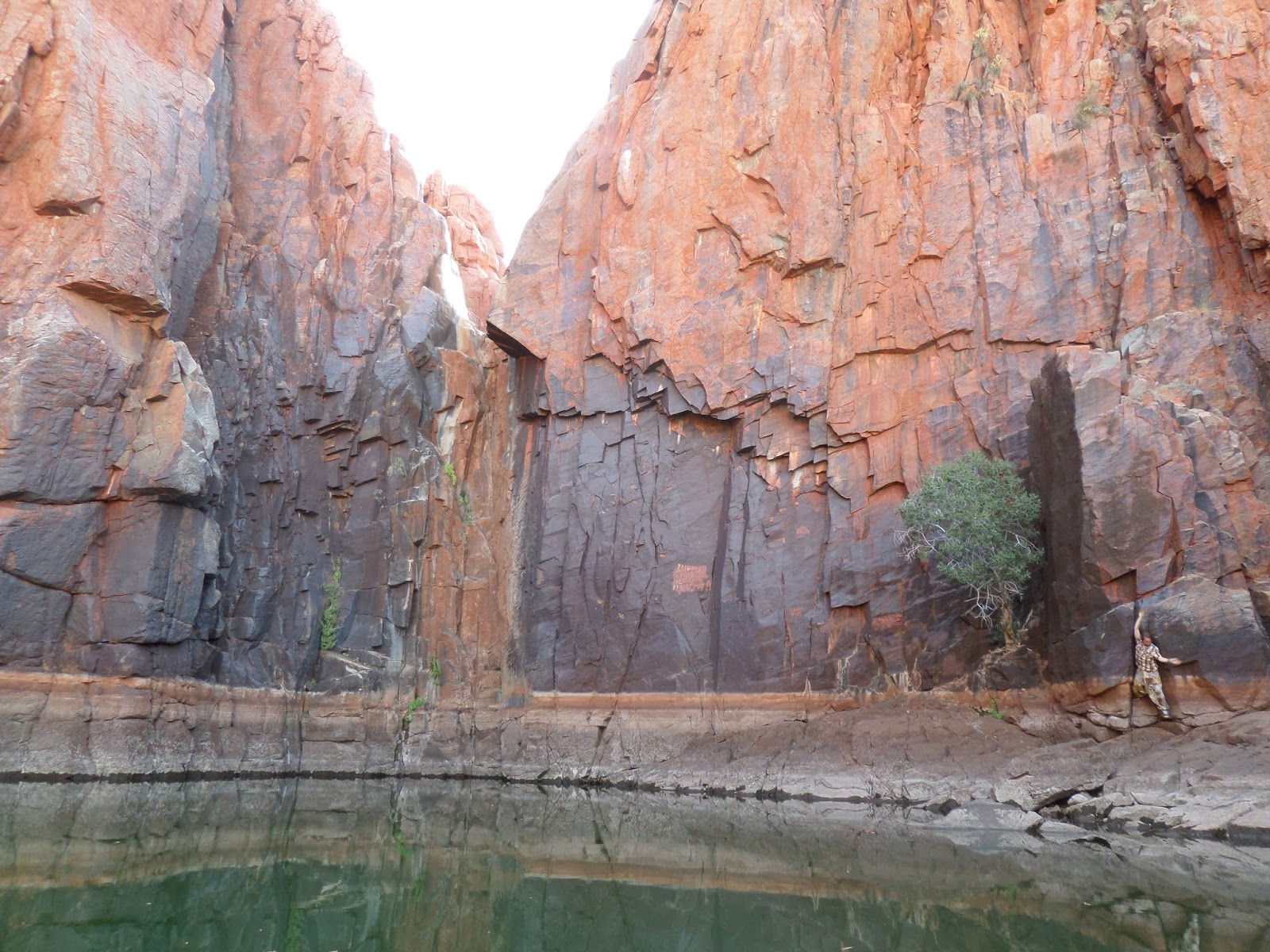 |
| Python pool |

Next day we
headed for the Karijini National park. The main park is in the south, which we
already saw four years ago when we were also in this region. We decided to take
the northern road, because we had not been there yet, although there were no
roads on the map that actually lead towards the park. Actually there was
nothing at all on the map on this road except a town name „Wittenoom“, but we’ll
get to that. There was also a gorge that we had visited the last time on the
western side of Karijini (gorges are deep narrow valleys with steep sides,
which Karijini is known for) that was one of my favourite ones, and since it
was only a 30km detour, we decided to see it again. Nearing the gorge from the
exact opposite direction than we had done the previous time, we found ourselves
on a road that was less than two cars wide and had rock walls going straight up
on both sides. There were some wider pockets between its bending curves for
when you met another car, but as it happens often in the West, we did not meet
any cars. The last time we had been in the Hamersey gorge, the parking lot and
the facilities were still being built and we were able to swim and climb in its
pools alone for a long time before the next visitors came. This time,
everything was all ready and polished and we found seven cars in the parking
lot, German echoing all over the valley. The gorge still had its colorful wavy
walls – a psychedelic effect guaranteed- and the water was still pretty and
clean, with trees giving shade and so on, so despite all the people, it was
still worth the detour.
 |
| Hamersley gorge |
 |
| Hamersley gorge |
 |
| Lunch break |
 |
| More of Hamersely |
 |
| The road to Hamersely |
When we headed
back where we were actually planning to go (the road going east north of
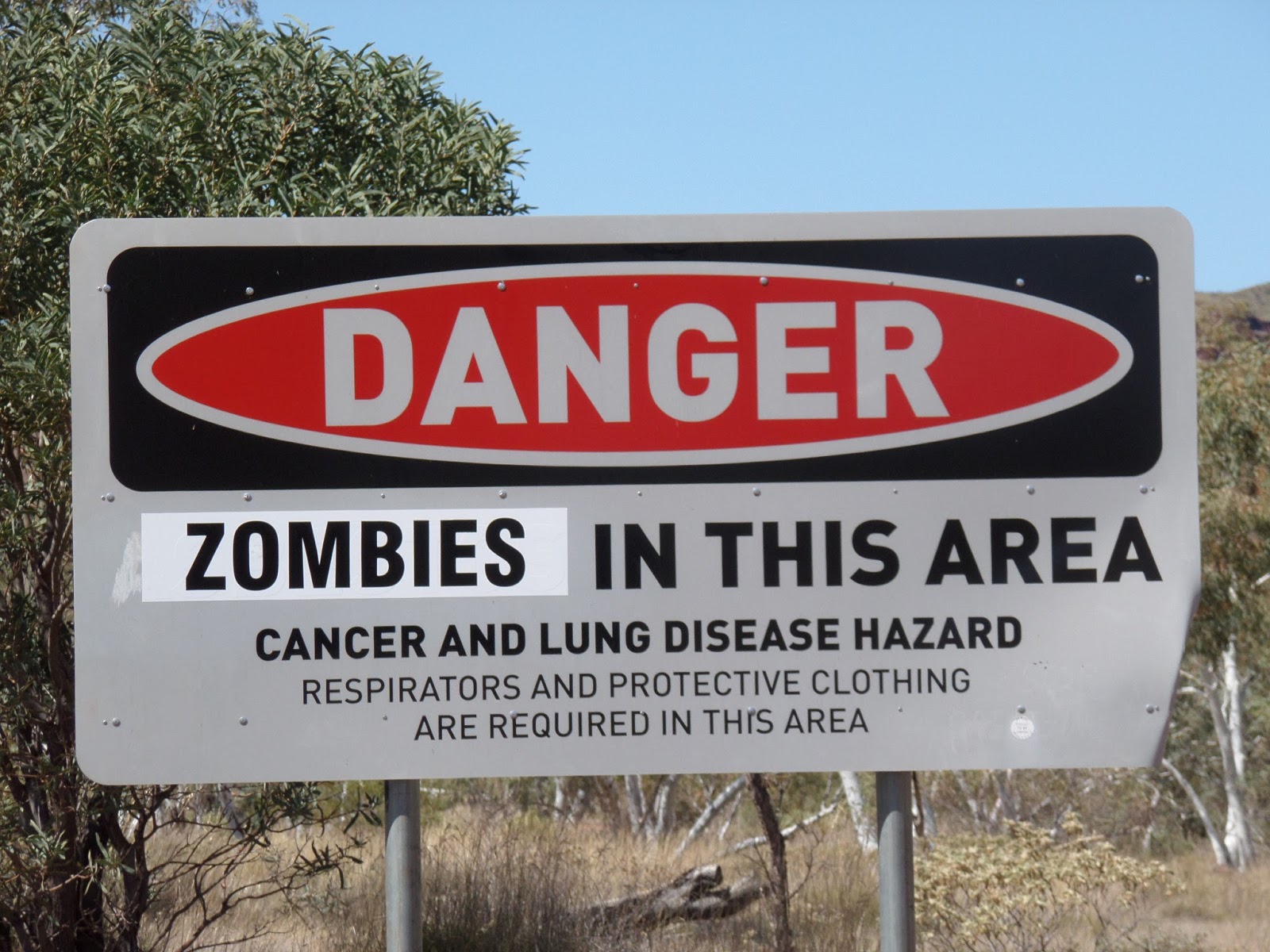
Karijini), we saw big signs about Asbestos danger in the area. As the map said,
there were no roads to be seen that would go left, and our necks were already going
sore from staring to the same direction. But all of a sudden, we saw an
asbestos warning sigh in the middle of the bush, and that would only mean a
side road. Sure enough, we found a road(-ish kind of thing), more of a path for
cars. The track kept following by the side of the road along the hills until it
finally disappeared between the hills, getting more and more 4WD as we went on,
with big stones paving the road, indicating that water must be using the same
road from time to time to escape the gorge. There were trees and bushes, in
contrast to the low bush that had been surrounding our way at the main road and
we moved slower and slower due to the ’road’ getting worse and worse. Suddenly,
when we were already anxious to find out where the road leads to (and well...
we were getting further and further away from the actual road and from any
possibility of help in case of breaking down), we found a car and a an offroad
caravan camping. It turned out that they had a map with even the offroad tracks
on it and the track we were on, was leading to the southern part of Karijini.
So we followed the road for another couple of kilometres and decided to follow the
other exporers’ lead – why not camp in a beautiful place with all the privacy
and freedom to run around naked and do whatever we wanted. The hills in
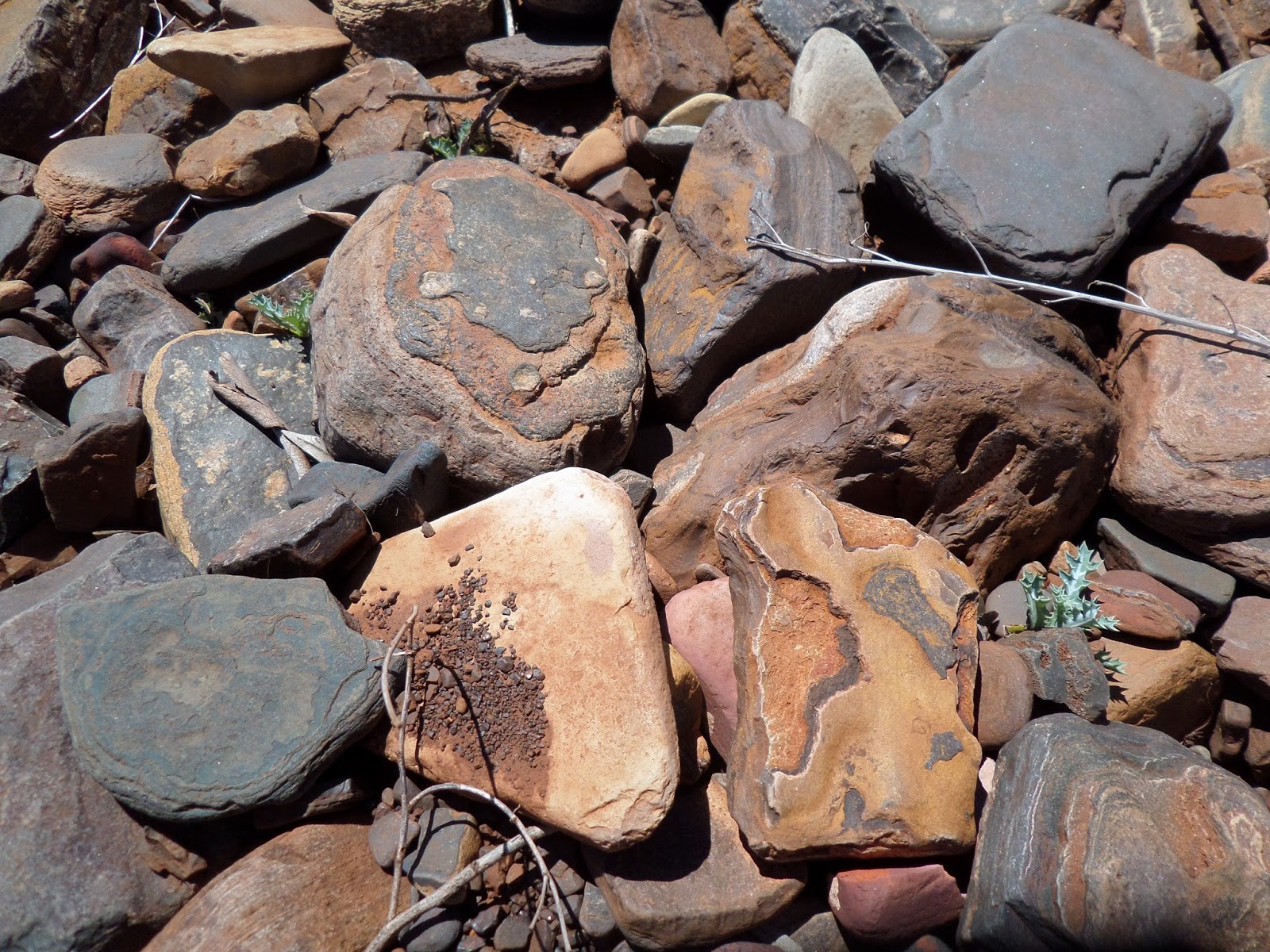
Karijini are not made up from your usual reddish layers of Australian rock. I
found stones on the ground that were ranging from bright red to yellow, from
deep purple to ink blue and many many that were like nature-made paintings
smashing all these stones together with tectonic forces. (I collected some
stones and tried to make a Rainbow Serpent – the aboriginal mythical creature,
who lived in the Dreamtimes and is responsible for most of the significant
geographic landmarks of Australia. The serpent was often helped by a giant mythical
kangaroo which I did not attempt to recreate mostly due to the sun setting). We
also had a campfire and were sorry that we did not have any kangaroo tails with
us because this would have been the perfect place for cooking one for the first
time.
The next day we
got back on the main road and after some driving found ourselves near some
houses. We found ourselves in a seemingly deserted town with beat-up houses and
smashed up cars. When we saw a man walking around and mowing the grass(?), we
decided to take the small road north, despite the fact that in some of the maps
there wasn’t even a road. There were more asbestos signs (on one, the word ’asbestos’
had been changed into ’zombies’) as we followed the road, which was partly
quite good asphalt, partly had more holes than there was asphalt, partly rough
4WD track and sometimes had pieces of it carried away by floods. At the end of
the road, we found what seemed to had been another small town, except this one
did not have any houses left. There were small roads and stone steps and some
plants that did definitely not occur naturally in this area. On the road, we
found a side of the hill that was quite bluish-gray and it seemed that someone
had been mining it. We decided that they had had an asbestos mine and a quite
lovely place to live until someone discovered that asbestos was bad for you and
there were health risks, which is why everybody moved away. Later, after googling
the town, we found out that we had guessed right and that there were three
people still living in the first town (the one with houses). So after visiting
one more unmapped road to another gorge, which looked pretty much similar to
the last one, we decided to move on. It is funny how you become immune to
amazing things after a while. You can look in awe for hours and wonder how such
beautiful things can occur in the nature. But when you see too much of it, you
feel bored about things that you would previously have been so amazed of. The
season of wildflowers was still going on in Karijini so the colours of the bush
was constantly changing... luckily I did not grow tired of that.

 |
| The rainbow serpent that I made |
 |
| Camping alongside the unmapped track |
 |
| Asbestos warning |
 |
| Psychedelic rocks |
 |
| Wittenoom church (everything is like sheds in Australia :D) |
 |
| No more fuel |
 |
| This is what happens when you don't wash your dishes |
After leaving
Karijini behind, we got to Auski tourist village, which is an overpriced place
(well... the prices are the same as in Onslow), like they all are, to get a few
more litres of petrol (we did have some more in the jerrycan, but not enough to
get us to Port Headland, which was the next reasonable town) and we were
recognised by a girl, who had also worked in Onslow but had left a month before
us. Australia IS a big place, but there are only so many places where you will
stop so I guess that we will see more of some people that we have already met.
So right now we are in a Caravan park in South Headland to wash ourselves and
our dishes (which have been ’bushwashed’ for the last couple of days), freeze
the bottles of water that kept our esky cool for the trip and do some job
searching. But we will probably head on to Broome because there seems to be
more vacant positions for the kind of jobs that we are searching for. Luckily
we have our AirCon working now, because tomorrow, the Great Sandy Desert awaits
us with even lower bush and higher temperatures.
 |
| Making bonfire |
 |
| Wittenoom petrol station and restaurant |
 |
| Wittenoom vehicles |
 |
| Near the end of wittenoom road |
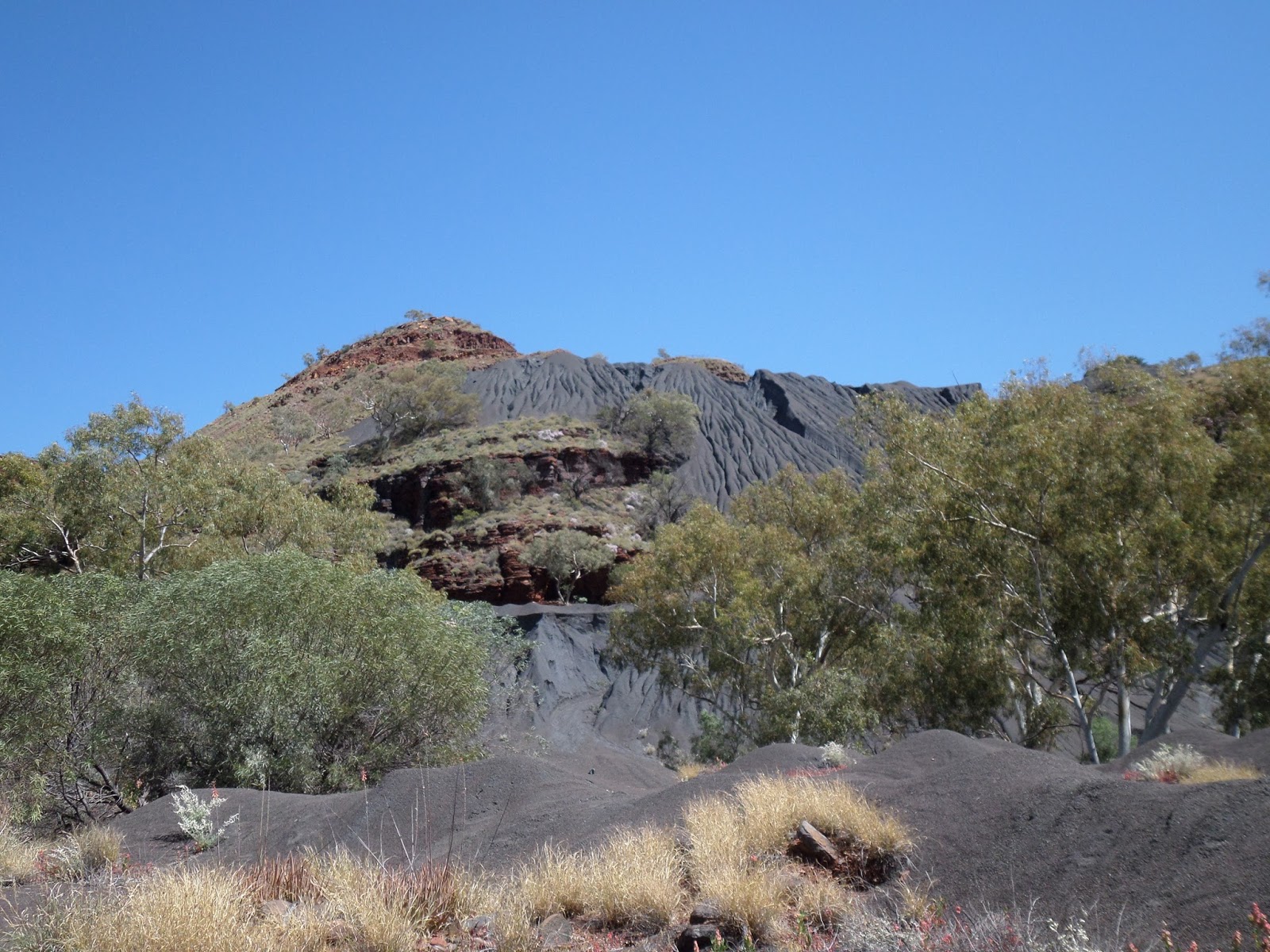 |
| Asbestos hills |
 |
| Did not want to climb higher (as I was not sure about getting down) |

 |
| A truck on the road |
 |
| Wittenoom |
Thursday, 8 September 2016
Enough of Onslow
So the time has
come to leave Onslow. All the mismanaging and psychopathic behaviour of the
managers finally drove us away (the job itself was not actually bad... if only
they would have different managers). As it has become a habit of mine, I had to
send a letter to the owners of the shop explaining the situation as well (I
have already written it but I will send it when we leave. I still have three
days of working there to go. And now the managers are actually sucking up to me
because they need someone to do the last three days since one girl is ill. It is a shame, because I still really like
Onslow. The first time that we went to sports club (a bar with free pool, darts
and other sporty games) we did not know anyone. The last time we walked in, 6-7
people raised their hands to welcome us... so we have made some new friends. So
why did we leave? The last drop was when...
When we came to
work here, we were promised 35-50 hours a week. I got about 33 during the first
weeks, then 38, so I was quite OK. Erik got about 34 during the first weeks as
well. Then the French couple was fired (they gave their notice two weeks ahead,
they came to work on Sunday and they were told that it was their last day of
work because a new guy was starting on
Monday; a week later Sharon came and gave us all a story about how it
was because of the French guy’s knee injury because it is not very useful for
them I we start going without any notice; not even the supervisor knew anything
about that excuse or the reasons for the firing; and the knee injury had healed
by the time they were fired) and all of the Sundays (we get 2x salary then)
were given to the new local guy although he is really not very consistent or
good at his job. So all the hours were redistributed so that Erik got even less
hours. So he started taking an interest in how many hours anyone had got and
was trying to understand the logic of distributing the hours. Then we made the
mistake of mentioning Sam and Sharon that Erik’s birthday is coming up and we
tried to get the hours rearranged so that we would have some time to cook some
Estonian birthday food (potato salad and so on). Their response was that for a
week they made it a point to mention every single day that we will be fired if
we do anything to the house during our birthday party (there were less people
in total at that „party“ than we have had living in this house together and we
tried to explain it to them several times that it is not that kind of party...
it is a few people eating and talking) and we both got full days on the day of
the birthday and the day before that. Generally traditional Estonian birthdays
are about people eating a lot and drinking a lot of vodka. If you don’t have
time to prepare the food then you can only concentrate on the second part.
After the „party“
they came for an inspection and they were the friendliest people that I have
ever seen, taking interest in our life (generally that does not happen... they
do not really want to have anything to do with you) and saying that the house
looks very nice and clean. And the next day back at work we were called in the
office and what we got was something like that (with a hissing and very threatening
tone): „You have been harassing people about their hours; you are breaching
your contract; you should be fired right now and asked to leave; you are not
allowed to discuss your hours with anyone; we thought that we were doing you a
favour by giving you more hours; you stole the new people’s roster from the
office; we have it all on the video; we could call the police“. Yes, we have
talked to other workers about our hours but I do not remember signing anything
that had me promise not to do it (and anyway, they kept the only copy of whatever
I signed. Both the contract and about the breaks that we are allowed to have –
which I think they have been breaching themselves because we do not get four
breaks when we work more than ten hours). Yes, thank you for giving us more
hours on that one week but clearly you gave them more to disrupt with our
birthday plans. And the point was not that we want more hours or less hours...
we wanted the hours to be more fair and distributed between us in a logical
way. Yes, both of us peeked at the roster that was in the office which was
probably not the right thing to do. But we were just curious about the new
names and wanted to know who they were replacing. If we had any normal
communication in the store we would not have had to do that anyway. (that is
actually taken out of my letter to the owner... I just added a few details and
took some out. I did not write to him about drinking vodka :D)
But before I
leave this chapter behind me, I need to describe some of the people that come
in (because I actually meet every single person in the town) I know the names
of most of them but I will not mention them. And I would really love to add
some pictures, but they (especially the aboriginal people) would probably not
appreciate it much.
One of the most
colorful people is an old (aboriginal) lady who often comes in and is looking
for her „keycard“ (bank card) because she is sure that she left it in the
store. She forgets things so she has systems to help her remember them. All her
bags have „ME“ written on them in red. She always wears a big hat that has the
pin number of her keycard written inside it. She wants to take our previous
supervisor (whose partner is a local cop) somewhere in the bush with guns and
then they are going to... „...you know what we will do with them guns“. She is
quite fun to talk to except sometimes when she pours all of her coins on the
counter to buy something but there are several people behind her.
Then there is one
(aboriginal) couple who are always bare feet and wear the dirtiest clothes and
have the dirtiest faces and sometimes have the dirtiest little babies that I
have seen. The man (eyes usually red and half-shut) has blonde highlights in
his hair and is quite big. They sometimes come in with purchase orders and
sometimes I am counting their coins so that they can get some diapers or cigs.
And then other times they come in with hundreds of dollars and buy alcohol and
sweets and sodas.
Then there is one
(aboriginal) lady who has real trouble getting out of the car even, she is so
big. At first she was also rude with me but after some time she is quite nice.
The problem with her is that I can smell her presence when she is already in front
of the shop. When she walks through an aisle in the shop, you can smell it a
couple of minutes after she has left. And sometimes she comes in and buys a lot
of things as well and stays near the checkouts. Then I always try to escape the
register for a couple of seconds at the time to get some oxygen.
Then there is a
white old man who comes in and buys at least one bottle of the same white wine
each day. So he may come in in the morning to buy the wine and some vegetables
and then again in the afternoon for just a bottle of wine and then again in the
evening for another bottle of wine and a bread.
Then there are
the Wheatstone people (they are building a gas plant outside the town and there
are about 7000 people living and working there) who always have several separate
orders of food. So other people in Wheatstone have given them money or a card
and asked for some snacks and stuff (they get their food straight from their
suppliers and it is cooked for them there so they only get additional stuff
from the town) and the people who come to the store then have sometimes 6-10
different orders that they want to pay for separately and packed separately.
And so on...
Anyways we are
leaving on Monday and will first probably go to Karratha (a actual bigger
town). They have actual normal grocery stores with much lower prices and some
choice plus shops for clothes and electronics and so on. After 7 weeks of not
seeing normal shops, I will probably want to buy all the food that they have
and everything else as well. But we will still find a job for a month or so
somewhere between here and Broome because after Broome we want to take the Gibb
River Road (660km of 4WD road with amazing natural sights) but we’ll see what
happens. First we will rest from the work for a few days and then we will see
what happens.
 |
| Our bedroom with my additions to the wall |
 |
| Our living room |
 |
| A small room that we have adjacent to our bedroom and a local aussie guy visiting us |
 |
| Also our house |
 |
| Onslow General Store |
 |
| The area for breaks |
 |
| A saltlake |
 |
| Checking out the sunset near the salt jetty |
 |
| Onslow salt jetty |
Subscribe to:
Posts (Atom)